JAZZ ROCK

Jazz Rock

JAZZ ROCK

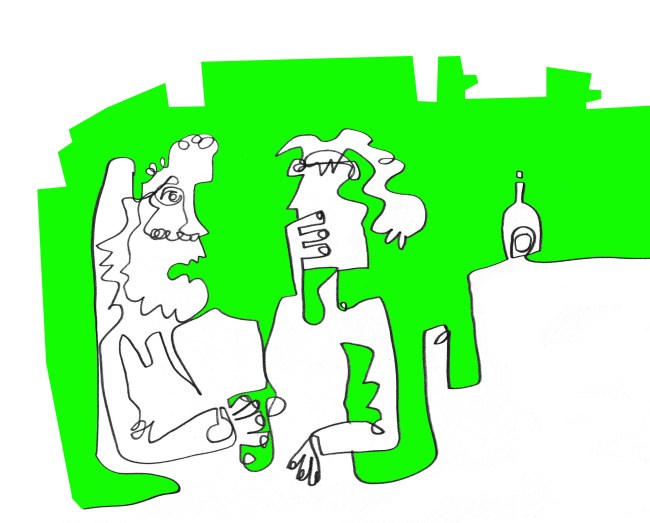
The cry of a trumpet: ‘I beseech you to go JAZZ’, it says and the spiky tail rocker transforms into a giant, pubic fuzz ball.

‘You is scrambling my brain in pussy weed, my horny friend,’ says the rocker.

The jazzster keeps blowing those difficult notes and the shaggy rocker rolls off, all hairy biker and tumble thatch.

‘Look at her go,’ croons the trumpet, suddenly sad and slow. ‘She’s got a bearded mass and a furry ass!’

‘Not she, I’m he,’ says the rocking fur ball, spitting hairs. ‘Just stop the jazz!’

And the horn is done.


picture by Jonny Voss

Posted in Uncategorized | Leave a comment

Deal Or No Deal

DEAL OR NO DEAL

The problem with you Brenda is you – you’re your own worst enemy. It was comments like this that made Brenda feel a little mad. Not because she felt insulted or crazy, but because she didn’t understand what was meant by it.

One person who liked to say this kind of thing was her sister, Margaret. But Brenda didn’t have time to dwell too long on such things; she was busy being busy and she was normally busy being busy doing things for Margaret.

Brenda picked up her sister’s children, Damian and Alicia, and dropped them off at school each morning.

‘Don’t stop at the gates and gawp,’ Margaret advised her. ‘They’ll sweep you up into the dog rescue van with all the other bitches.’ ‘That’s definitely insulting,’ thought Brenda, ‘but I still don’t know what she means’.

Margaret’s children weren’t any less brutal: ‘Don’t put your smelly bum on the seat next to me,’ yelled Damian from the back of the bus so everyone could hear.

‘She’s a paedo,’ squawked a smirking Alicia, who was six going on a wicked sixty-six. Plain embarrassing, but no-one said anything or tried to call social services.

Brenda would take them to the primary school gates, hand them their sandwiches, crisps and fizzy drinks, and then wave them goodbye. They never waved back, but she always stayed there waiting just in case, until they were safely indoors. Then it was off to collect the shopping from Mr Patel’s for her neighbour, Mrs Doherty, who had problems with her legs and her drains.

Mr Patel always greeted her with a smile.

‘How’s Brenda this morning?’ he’d ask.

‘Brenda is doing fine,’ she replied. ‘And I’m doing fine too.’

‘Hey, hey, funny one, Brenda. I like that. Very smart reply.’

No-one, except Mr Patel, ever said her name with anything approaching his kindness or respect, and no-one ever complemented her like he did. She liked to linger in his shop, to keep out the cold, to feel his warmth.

‘Icy weather, Brenda. When’s it going to stop?’

‘On Sunday; I heard it on the radio this morning.’

‘Good, good. No need for a weather girl when I’ve got you, eh?’

‘No,’ and Brenda blushed.

She picked up Mrs Doherty’s shopping bags and waved goodbye through the shop window. And Mr Patel waved back.


Mrs Doherty was waiting at her door.

‘Have you got your drains sorted, Mrs D?’ asked Brenda.

‘I’ve rung them a thousand times but they never turn up.’

‘Would you like me to go in and see them?’

‘Silly girl, that wouldn’t do no good, would it?’

‘Okay, Mrs D. Here’s your shopping and your change’

‘Thank you, Brenda. You take care now.’

‘And you, Mrs D. Knock on the window if you need . . .’ but the door slammed shut before she could finish what she was saying.

Then it was next-door to feed Mr Pearson’s cat. He never seemed to feed it and so it had become a habit. And now he was dead she saw no reason to stop. She had known Mr Pearson was dead because the sweet sickly smell coming through his letterbox reminded her of when she had nursed her mother, and she had died. No-one else seemed to know though, and the smell had been wafting out of the door for weeks now.

Brenda’s day was busy with activities right up until two. Then it was back to the bed-sit she’d lived in since leaving her mother’s house. She liked to get her feet up and eat a peanut butter and banana sandwich with a cup of strong tea. The sandwich reminded her of a family holiday to Butlins at Bognor Regis in 1988. An American boy called Clint had shown her how to make one, and she’seen eating them ever since. She wrote to him every week for three years and received one reply from his mother saying he was doing fine and had just gone off to serve his country against Iraq. Brenda still has the card tucked into the side of the mirror above her gas fire.

Twenty minutes of Radio 5 chatter and then it was off to pick up the children from school. On Fridays she treated them to a McDonalds, which made them even more maniacal than usual.

This Friday when she arrived with them at her sister’s house, Margaret wanted to know why she was late.

‘I nearly rang the police.’

‘But I always take them to McDonalds on a Friday,’ replied Brenda.

‘Lucky you! Spending your mad money like you’ve actually earned it.’

‘I’ve got you a Super Mac.’

‘Big Mac! What about my milk shake?’

‘Strawberry, wasn’t it?’

‘Chocolate! Fuck! Fuck! You never get it right.’

‘Sorry.’

‘Give it here then.’

‘I’ll see you Monday.’

‘Yeah, yeah.’

‘Bye, Damian and Ali . . .’ But the door slammed before she was able to hear if they replied.


Brenda loves Mr Pearson’s house because it’s similar to the one she used to share with her Mother. When he died Mr Pearson had left his back door unlocked. After leaving the children she lets herself in and brings his cat in with her.

She drags his emaciated body along the upstairs landing and into his bedroom; tucks him tight in his bed, and presses a rolled up blanket against the crack at the bottom of the door to keep the smell in.

She hurries downstairs to make herself a cup of tea, and then settles down on the sofa to watch her favourite programme, Deal or No Deal. She puts her feet up on one of his chairs but is careful to put a newspaper on the seat so not to leave a mark. She reaches into a carrier bag and pulls out her burger – she’d been too nervous earlier to eat it in front of her niece and nephew.

‘Luxury,’ she says. ‘If you could see me now, Mum, I think you’d be proud. This is really roomy,’ and she twiddles and pokes out her toes to make her point.

Deal or no Deal makes Brenda very heated. She has her favourite numbers – Damian’s and Alicia’s birthdays, her own and Margaret’s; the number of her house she shared with Mum; the date Clint’s mum wrote to her, and last of all, the date of her Mum’s birthday: the 12th. That’s the number she hopes will be in her box if she ever gets onto the programme. Not that she’ll ever try to, because she’d be frightened of embarrassing herself and her family. In her dreams the number 12 serves as a kind of memorial; and as a starting point for discussion so she can tell Noel Edmonds how nice her Mum had been.

Today, Alex, a hairdresser from Edinburgh is chosen along with his box marked 12, and Brenda is straight off the sofa and roaming the room.

‘Go, Alex, go! You can do it!’ she shouts, and Mister Pearson’s small tabby shoots for cover under the dining room table.

In the first few rounds, Alex rides his luck but is still left with the possible jackpot of £250000. Brenda is a flurry of optimistic activity and excitement, taking large gulps of her tea as she paces the room.

In round five, Alex spectacularly loses boxes containing 100000, 75000 and 50000. Noel Edmonds puts a consoling arm on Alex’s shoulder and Brenda’s slumps into the sofa, her face drenched in hot tears. The tabby jumps on her lap to lick her cheeks.

In the studio the Banker rings. Noel Edmonds picks up the phone and tuts throughout the call.

‘Nasty banker, nasty banker!’ yells Brenda.

Alex is made a paltry offer to stop the game by the Banker but the holy grail of 250000 still beckons from the horizon.

‘You only live once,’ declares Alex. ‘I came here with a plan and I’m determined to see it through.’

Brenda repeats his words like a holy mantra: ‘You only live once. I came here with a plan and I’m determined to see it through.’ The audience go wild. Perched on the edge of the sofa, Brenda claps and playfully brings the tabby’s front paws together to clap as well.

The front doorbell rings.

‘This could be the biggest decision of your life,’ suggests Noel and Alex nods in agreement.

‘Ask the question, Noel?’ he says.

‘£10000, Alex. Deal or no deal?’

‘No deal, Noel.’

‘No deal,’ repeats Brenda.

Alex is a gambler: the audience are in ecstasy; they whoop and holler and so does Brenda.

The doorbell rings again.

The penultimate round; there are only five boxes left to choose: four holding insignificant prizes, one with the big one.

Alex gets lucky this time. Three boxes are chosen and ejected from the game. The audience stir up into a gladiatorial frenzy but Brenda is awed into silence. She understands immediately that Alex is now left with the possibility of choosing 50 pence or £250000. A cathedral solemnity suddenly takes over the studio as the audience realise too. This is bigger than life or death. The Banker makes his final call.

The doorbell rings again, and this time Brenda hears it.

‘Go away,’ she whispers but the bell keeps on ringing.

Noel looks more serious than it’s possible to be. ‘Alex, I wasn’t lying before but now really is the biggest decision of your life: £75000.’

Someone taps the lounge window. Brenda sees their hand through the nets; a ghostly palm shaking the pane.

‘Alex, think clearly, £75000 is a lot of money,’ counsels Noel.

Brenda remembers the time when they came and found her with her mother’s dead body in their home. She’d answered the bell that time to let them in; and had ended up locked in Granges Retreat for three years.

‘Even for you this takes the biscuit,’ Margaret had said on her one visit there. ‘How could you let Mum get into that kind of state, you’re worse than an animal.’

So Brenda knows better than to answer the door now.

‘I’m not here,’ she mutters under her breath.

‘Ask me the question, Noel,’ says Alex.

‘£75000, Alex. Deal or no deal?’

There is a voice at the letter box: ‘Brenda, I know you’re in there. I saw you let yourself in. Is everything okay?’ It’s Mrs Doherty.

‘I’m not really here, Mrs D, but everything is okay,’ and as she says it, Brenda crouches at the doorway leading into the hall.

‘No deal, Noel,’ says Alex firmly.

‘Brenda, there’s a terrible racket and smell in there. Is Mr Pearson having problems with his drains too?’

Brenda is caught in nowhere land between the television and Mrs Doherty’s voice at the letter box, between Alex’s fate and her own.

Noel’s tongue circles his lips in anticipation: ‘Alex, I hope and pray that the box in front of you contains £250000 and not just fifty pence. Let’s open the box now and see.’

‘Brenda, I can’t stand here all day, my legs won’t take it. You have thirty seconds to let me in or I’ll have to call your sister.’

The seconds pass without reply.

‘Are you opening the door or not?’

Brenda goes determinedly on all fours into the hall to answer the question.

‘No deal, Mrs D,’ she yells up through the letter box. ‘No deal!’

Behind her Brenda can hear the crowd celebrating and going mad like there’s no tomorrow. She rushes back into the lounge, closing the door behind her. She turns the sound on the television up to maximum.

Alex punches the air and is engulfed by a throng of ecstatic well wishers. Some of the audience wipe away tears; others chant Alex’s name.

Brenda scoops up Mr Pearson’s tabby and dances wildly round the room.


Posted in Uncategorized | Leave a comment

AN EASTER PRAYER

Image

There, there

The fool that you are, Robert

Is that druff on your shoulder?

It is not, you fiend

Oh, Meg, tarry a while

I will not, I cannot

Please, I’ll make an honest woman of you

The cheek of it, you don’t have it in you

My kisses say I do

Get your lips off me, man

If you love God you’d want to taste a bit of heaven

That’s sacrilege and blasphemy

It is not, it’s as pure as snow to love a woman

You big bastard with your clever words

Come on then, undress a little and show me your thigh

Only the right one

And the space in between

Aw, Robert, you’ll ruin me

Meg, we’re all ruined in the eyes of God

Amen to that

Amen, Meg . . . amen


picture by Jonny Voss

Posted on by Alan McCormick Writing | Leave a comment

Cancer Bob


http://http://m.youtube.com/watch?v=15S8kLijvls&desktop_uri=%2Fwatch%3Fv%3D15S8kLijvls

Cancer Bob was originally written by me in response to one of Jonny’s pictures and appears in our book, Dogsbodies and Scumsters. The video is by German filmmaker, Raimar Oestreich.

Posted in Uncategorized | Leave a comment

REAL MUMMY

REAL MUMMY

The hospital canteen has been converted into a performance hall. There are still brown tea stains on the worn plastic tables – a pair of lurid yellow stockings on the frizz-perm gargoyle next to me; ladders too. Her eyes are ruby red sitting amidst grey skin puddles. On a series of upturned beer crates a large man with a cowboy hat is singing: ‘Yipee-yi-yee, yipee-yi-yoh-oh, Ghost Riders in the Sky.’

He’s performing to a backing tape and his zip is undone, his ring finger poking and turning through. I’ve never seen anyone enjoy a singsong so much, except perhaps for my Alice; before her throat began to constrict. But his bellowing style is not to my liking. I want to get back to my room and record things as they really happened.

*

Alice was a normal girl. A darling, little mummy’s girl with long blonde hair tied tight at her back in a ponytail. She had a sweet tooth too; like a pony.

A few months ago, my husband, her father, went to fetch the Daily Mirror. We didn’t really miss him when he didn’t come back. Those were the best times: just the two of us, lying on my bed swapping Opal Fruits (I liked the green ones), Alice trying on my clothes; both giggling at the ballooning scarecrow images she cast onto the wall.

Our good times were short lived. Poor Alice began to get ill. I saw a rash on her upper arm – little red pimples at first, then ugly patches of sore dry skin circling around centres of purple-like bruises. She got headaches too. ‘Tight,’ she’d say: ‘mummy, my head’s tight.’

After doing things with the Dettol, I started sorting her diet. ‘No more sandwiches for you, young lady,’ I’d say. Then I set about eating all the sweets in the house, just in case she found any, and put her on a diet of rice, vegetables and fruit. But the rash grew hotter, itchier, and her little eyes began to redden with irritation.

When I gave her a bath, the water hurt her skin and made her cry out; even when I put in less disinfectant. So I took her to the local casualty. I spoke with a Registrar, Mr Henry, who was very polite and handsome in an unobtrusive kind of way. The kind Staff Nurse on duty was Olive Stones – a name that only made me laugh when I wrote about her after we got home. I would get to know Olive really well over the next months.

Poor little Alice: sitting on the slim trolley mattress, legs dangling over the precipice. So like me: she noticed how dirty the hospital floor was too.

‘It smells in here,’ she said.

‘Don’t make a fuss, dear. Mr Henry is going to make you all better, you’ll see.’

Mr Henry had lovely clean fingernails and delicate sensitive hands.

‘You probably play the piano,’ I said.

‘Mrs Simmons, your daughter is quite ill. We’d like to keep her in overnight, just to keep an eye on things. You can stay if you like, there’s a parents’ room attached to the ward.’

I went home to fetch my nightdress and bathroom bag; one of those nice Schubert piano pieces cascading notes in my head as I walked. The stars in the sky looked so lovely – like the transfers I’d stuck onto Alice’s ceiling to make her smile.

In the morning I got up early and helped Gloria, the ward assistant (West Indian, not African, I think), with making drinks for the children. Poor little mites – some with tubes attached to their noses, and a few with toy-like wheelchairs parked next to their beds – forgotten teddies lolling about on their bright Noddyland pillows.

Alice looked much better. She was asking a nurse – a new one from the agency whose name may have been Samantha – to tie her hair tight at the back. She and Alice seemed to get on very well.

‘Mummy, you look tired,’ Alice said.

‘I’m fine, I said, ‘just thinking.’

‘Mummy-type thinking?’ she asked.

When I got her home I rang work and told them I wouldn’t be in for a bit. Mr Kazaradis, the owner of the flower shop, asked if everything was okay.

‘Little Alice is very ill,’ I said. ‘I have to be with her and make sure she gets well.’

He offered to drop off some shopping. I told him we’d manage.

‘Mothers know how to manage, Mr Kazaradis,’ I said.

The next few weeks I kept Alice off school. Her symptoms worsened: ulcers on the tongue, and an upset stomach resulting in loose khaki-coloured stools. I put the latter down to the milky Horlicks I made her drink at night to strengthen her bones. And so I stopped giving it to her.

At night she’d wheeze and stare dully up at the Winnie the Pooh mobile turning above her bed.

‘Tigger’s going to look after you,’ I’d say as I switched off her light.

On our seventh visit to casualty, Mr Henry was on duty again. He saw me straight away and then located Alice who was huddling under the flap of my coat.

‘How are you, Alice?’ he asked.

Alice just shook her head and held tight onto my leg.

‘Mind the stockings, darling,’ I said, smiling at Mr Henry.

We were taken into our own cubicle; only the second time that had happened. The floors were clean and looked as if they’d just been polished.

‘Special treatment, fit for a princess,’ I told her. ‘You can see your soul in there.’

Mr Henry was busy pointing a torch into Alice’s mouth. He retrieved something and then led me by the arm into the reception area. He looked serious. Serious and handsome.

‘Do you realise your daughter had a ball of tissue stuck in her throat?’

‘Silly girl; I gave her a roll of toilet paper to have by her bed in case she was sick in the night. She must have got carried away.’

‘She has a very high fever, Mrs Simmons.’

He was very definite: commanding, and yet reassuring at the same time. Perfect bedside manners. I was relieved that at last they were taking us seriously; now they realised she really was ill.

Seven days and seventeen hours later I was allowed to take her home. They had her back on normal food. Her last sweet on the ward was a banana and apricot yoghurt.

‘Please, no allergies,’ said Mrs Patel, an ill looking Indian Nutritionist. ‘She must eat normal food from now on. Big helpings. She’s a little girl and needs building up. You understand?’

‘Yoghurt,’ I said. ‘Things like that.’

‘And vegetables, meat, potatoes, fruit. Yes?’

‘Yes, big helpings of yes,’ I replied.

The next few weeks, Alice and I took to watching daytime television. She liked all the discussion programmes.

‘She’s pretty,’ she said once.

She meant that donkey-toothed Esther Rantzen.

On Wednesday afternoons, at about three, a young Social Worker called Roxanne started to visit. Not every Wednesday and not always on time. ‘Staff shortages’ Roxanne explained. She had cropped black hair – a young boy’s cut really – and wore a baggy purple mohair jumper with a little political badge on her left breast. When she left I’d have to bring the hoover out to get all the loose hairs off my sofa.

She and Alice liked to play on the floor with little plastic family people.

‘Is she eating okay?’ she’d ask.

‘Like a dustbin,’ I’d reply.

In a book, ‘Things Doctors Don’t Tell You’, they advised lots of vitamin C and calcium for copper-coloured skin and lethargy. So I started her on milk again. I heated it in a pan and crushed in a few vitamins that I normally kept by my bed. A little child’s Aspirin too, in case the fever came back. Alice complained that the milk tasted bitter and so I added a large spoon of honey.

‘Like Winnie,’ I said.

‘There’s nothing like a Tigger,’ she said and tried to bounce out of the kitchen. Only her legs were too tired to bounce and she ended up falling on the floor.

The next morning she found it difficult to get out of bed and so I took her back to hospital. They had asked me not to bring in her again unless it was a real emergency. We hadn’t been in since two Sundays ago and this really did seem properly serious.

Alice was in a deep sleep when I carried her in from the taxi. The driver could see it was serious too and didn’t ask for any money. When we arrived we caused lots of commotion; nurses and doctors running in from everywhere. Olive Stones saw that I was worried and took me to the visitors’ room. She even made me a cup of tea; nice and strong, with two sugars, just as I liked.

I sat there for over an hour. All the magazines were encrusted with dirt. One was called Titbits. It had a celebrity on the front, an American actress whose name escapes me with a heavily made up sticky looking face.

Finally, Felicity came in and introduced herself: ‘I’m a Child Protection Officer.’

‘And I’m Alice’s mother,’ I replied.

When she asked I told her about the pills I kept in my bedside table: the ones I gave Alice to get better. I had some in my handbag. She asked to see them. I handed her five little bottles. She took them and left the room quickly.

Maybe thirty-seven minutes later a tall policeman with a sweet calming voice asked me if I could join him outside. A young family looked up when he spoke. The young girl stopped crying and smiled at me. I wanted to tell her mother that the girl had something hanging from her nose but I thought better of it – she was one of those slutty types who reeked of alcohol and cigarettes.

I asked if I could see Alice, but the policeman said it’d be better if I went outside and got some air. As we left in his car I saw Mr Henry walking across the car park. I did wave but I don’t think he saw me.

*

Now Alice lives with a family in Windsor. They own a big house apparently, and I’m told that from time to time, Lawrence, her father, goes to visit her there. I’ve asked the Social Services to tell her not to trust him.

I make toys in here. I sent Alice a large foam Peter Rabbit that I’d stuffed with a few broken pointy sticks. I put in a note saying, ‘mummy loves you bestest, darling, always remember that’. I kissed the envelope shut so it would stick better.

I’ve been given my own room here ever since that Johnny Cash man tried to get into my bed in the dormitory. It’s a strange place – no one got up to see what was happening even when I shrieked and shrieked.

There are lovely grounds here. I look at them through the bars on my window. Apparently the bars are there to keep us in, not to keep people out. I have a picture of Alice by my bed. I always brush my fingers over her face and hair before I go to sleep. She doesn’t have a ponytail anymore. She’s standing with her new family in a park somewhere. The parents are quite tall and now she has an older brother and sister. Alice looks peaky though. They should have made her zip up her jacket. Real Mummy would have seen to that.

** Real Mummy won the Middlesex Literary Festival Short Story Competition judged by Matt Thorne and was wonderfully read by actress Sarah Bates at the Rose Theatre, Kingston in 2014.

Posted in Uncategorized | Leave a comment

Meet the Builder

                                                  MEET THE BUILDER

Looming over me in my lounge, his barrelling chest and thick tanned arms shout builder.

‘What are you then?’ he asks.

‘A writer.’

‘What?’

‘I’m a writer.’

‘Then you should write about me. You won’t believe what’s happened in my life; you simply won’t believe it.’

He waits for a response.

‘Shit doesn’t happen to me, it falls on me.’

‘I see; I’m not sure it’s a workable image.’

‘Don’t get fresh now.’

‘Give me an example then.’

‘You wouldn’t want to know.’

‘Oh, but I would.’

‘I wasn’t brought up, I was dragged through a hedge backwards and then all the goodness was kicked out of me.’

‘Goodness?’

‘I was sent to Borstal at fourteen.’

‘What for?’

‘Can’t tell you.’

‘How did your parents react?’

‘“Parents”, “react”: you’re showing your class, my son. What parents?’

We pause. He looks around my room. He takes in the books, the music collection and the two large abstract art posters on the walls.

‘You like art,’ he observes.

I nod in agreement.

‘I was good at painting at school,’ he adds.

This is the problem, you tell some people you’re a writer and they want to be in on the act. They want you to ghost write their life and turn them into a celebrity. Ask them for specifics and they’re less forthcoming. It’s an internal brag that they can’t express without resorting to cliché or generalisation: “Could have been a contender”, “I come from the school of hard life and hard knocks”.

‘My father was executed on the Isle of Man for crucifying a goat.’

‘No?’

‘No, I said that because you were miles away. Rude that, very rude: my life not good enough for you? What were you doing anyway: writing a novel in your head?’

Now there’s animosity, a grudge bruising the atmosphere. Another pause, longer than before, his muscles twitch and uncertain smiles are exchanged.

‘So how long do you think the job will take?’ I ask, gesturing at the bubbling patch of damp wallpaper above the fireplace.

‘Oh, want to talk about work now, do we?’

‘That’s what . . .’

‘Put the books away and get the plaster board out, my good man?’

‘Well, you need to . . .’

‘I need to break into some manly working class sweat because I’m not worthy to discuss writing with?’

‘We could talk about books whilst you work.’

‘What will you do: sit behind me with your literary thoughts and time me? No, keep your books to yourself; I’ve got a job to do.’

He stares at me with a blank expression, and then breaks into a fit of high-pitched giggling: ‘I’m just busting your balls, my friend, don’t take life so seriously.’

He picks up his wallpaper scraper and slides it under the paper and tears off a long strip, then digs his thumb into the wet plaster behind and smells it. He presents his damp thumb in front of my face.

‘I love the smell of damp in the morning; it smells of money.’ He keeps his thumb close to my face: ‘Remind you of anything?’

I reluctantly inhale. ‘Rotten eggs?’

‘Not really, but you might end up with an egg on your face one day.’

‘Look, I’ve got to sort a few things out. Will you be okay until I get back?’

‘What do you think might happen? Do you imagine me emptying a tin of paint down your computer screen?’

‘I’ll be back.’

‘Like the Terminator,’ he shouts as I close the front door.


I take an outside seat at my local café and order a coffee. Now I can indulge my favourite past time of sitting and watching.

At the next table an old man in a white shell suit, red Armani logo T-shirt, black socks and grey loafers, is doing a passable impression of Mike Read by smiling two rows of dazzling dentures at his bubble-perm companion. Meanwhile, a very old, very thin man in a khaki raincoat is being pulled sideways by an impossibly large, unusually ugly black-and-white dog that will one day probably end up eating him. I’m storing all this information and just about to bite into my custard tart when I feel a presence in front of me blocking out the sun.

‘Coffee break, eh? I thought you had things to sort out.’

‘How’s the job going?’

‘Sorting thing out in your head, perhaps? You have a very rotten wall, Sir; the whole thing will have to come down.’

‘Are you sure?’

‘Can Wayne Rooney kick a ball?’

His eyes are bulging. Incredible, he wants me to answer: ‘Yes Wayne Rooney can kick a ball.’

‘And I’m a builder and I know how to build. I may not be able to kick a ball that well but I know how to give a wall a good kicking.’

He orders a beef sandwich and a can of coke, then lights up a cigarette. He taps out another cigarette from the box. ‘Share the pipe of peace?’

‘No thanks, I’m trying to cut down.’

‘Of course you are, Michael.’

‘That’s not my name. I try not to smoke before the sun goes down.’

‘Brought up in the tropics were we?’

‘Why do you ask?’

‘“Sundown”: very colonial.’

‘I didn’t say “sundown.’

‘And I saw the picture of you and your parents in the lounge. In India were you?’

‘Rhodesia.’

‘Zimbabwe? Had many servants, did we?’

I finish my custard.

‘Probably better to eat fat than smoke,’ he says.

‘For fuck’s sake, give me a cigarette then.’

He hands me one. He is about to light it when his sandwich arrives. He clips off his lighter.

‘Don’t mind the swearing but it’s rude to smoke when people are eating, don’t you think?’

‘It is, yes.’

He laughs and lights the cigarette. ‘I’m pulling your dingle-dangle, Michael. Enjoy a smoke when you can, and don’t be so solemn.’

He takes a big bite of the sandwich and sucks in a long strip of fatty beef between his lips. Mouth full, he continues: ‘I’ve got a degree, you know. A degree in life, not books.’

‘You surprise me.’

‘I surprise myself. Have you got a notebook and pen to note all this down?’

‘I don’t want to write about you.’

‘You say that now. Who else are you going to write about? A bunch of arse-wipe academics: Polly, the peephole Professor? Henry, the horse-hung historian?’

‘No.’

‘You don’t know about people like me.’

‘I don’t want to.’

‘What do you write about then? Who do you write about?’

I don’t like this kind of conversation, and I certainly don’t want to have one with him. In any case I don’t really know any answers, but find myself answering anyway: ‘I write about life.’

‘Of course you fucking do; what else is there?’

He lights another cigarette and offers me one.

‘I still have one.’

‘Your crumbling wall is a metaphor for your life, the wailing wall of your wailing mind, the damp spot on which you chose to lay your foundations. Something rotten in the state of Denmark methinks.’

‘Look . . .’

‘Read Hamlet, have we?’

‘Yes.’

‘Surprised that I have?’

‘I don’t care.’

‘Of course you don’t.’

‘Give it a break. You have a chip on your shoulder and I’m not here to rub vinegar on it.’

‘Ugly image, I wouldn’t use it, Writer Man.’

‘That’s enough. Here’s five pounds for my order; use the change for yourself. Finish your meal, and then come round to collect your materials and leave.’

He puts the five-pound note in his mouth, tears of half and lights it, and then eats what is left.

‘Aren’t you going to leave a tip?’ he shouts as I walk away.


When I return to my flat I find my lounge upturned. The picture of my family has been smashed into the carpet, and the computer screen is covered in white paint.

I try to wipe it off with toilet paper, and only make it worse. Then there is a loud series of bangs on the front door. I feel my heart thumping.

‘This can’t be, this can’t be,’ I repeat like some kind of Donald Sinden old thesp about to have a heart attack.

I go to the front door peephole. Pink flesh blocks my view, and then a hammer blow against the frame makes it and me shake.

‘I’m going to phone the police!’ I shout.

I run back into the lounge and see the multi-coloured tumbleweed phone wires ripped from the wall. I find my jacket in the hall and search for my mobile in the top pocket. The hammer taps out a question against the front door. And when I look through the peephole I find what I was looking for.

‘Want this?’ he asks, rotating it around his fingers like a cowboy’s six-gun.

‘Would you just go away?’

‘If you ask nicely I won’t hurt you. Of course it will depend on your pain threshold.’

‘Please!’

He swings the hammer hard at the door again. This time the lock starts to separate from the doorframe and the frame itself begins to splinter apart.

‘Two more should do it,’ he shouts and swings again. A huge crack appears across the middle of the door.

‘I’ll write it, I’ll write about you!’ I scream.

Silence. I look through the peephole: he’s gone.

I walk back into my lounge and pick my chair off the floor. I close the curtains, find my notebook and pen, and sit at my desk and start writing.


Meet the Builder was read by actor Nirjay Mahindru as part of a showcase of my writing at Kingston’s Rose Theatre in 2014.

Posted in Uncategorized | Leave a comment

CHARLIE PARKER, NOT PARKER KNOLL

* Click for Cliff Chapman’s brilliant reading of the story

 youtube=http://www.youtube.com/watch?v=Rfgb0RwwVUA

CHARLIE PARKER, NOT PARKER KNOLL

I am lodging at Mrs Smart’s lime green fronted guesthouse situated on one of Worthing’s least promising streets. A seaside view is afforded, albeit over a garage; where my room is perfunctorily furnished, it is also mercifully dust free. My lone fellow guest is a Mister Jacque Kerouac; nominally of North American nationality but combining, as he is wont to tell us, Breton-Indian antecedence. A queer fellow in all respects, much given to carrying a bottle containing what I am relentlessly told is ‘God given amber-whoosh-blood.’ An unlikely combination of confused imagining and speculative adjective, I think you’ll agree. In said bottle resides plain brown bourbon, a colonial corruption of whisky.

Mrs Smart is a landlady of the floral pinny and Friday morning hair-set-school. Her world, her empire, is her guesthouse: we, the lodgers and her husband, are her decorous subjects. What goes on in this surprising establishment is described as follows. I shall endeavour a degree of accuracy in my description borne from the scrupulous horizontal formed notes I have recorded when retiring upon my slim, single divan.

It is breakfast. I am seated alone over an impenetrable hard-boiled egg.  Mrs Smart and Mister Jack sit together at the next table.  Husband, Norman, is secreted under a Daily Mirror on an armchair by the fire.

Mrs Smart is addressing Mister Jack: ‘I don’t think you should be thinking of setting out in the cold and rain; certainly not with just your thumb in the air.’

‘English people don’t like to give lifts. Not to strangers. It’s just our way, old son,’ Norman adds helpfully from under his paper. Mister Jack continues with his eating. He is noisy in this respect but presumably all ears.

Mrs Smart continues. ‘There’s a nice fire here. Why don’t you take off your boots and warm your socks and toes near the coals? Norman will give you his chair and I could put on that music you like.’

‘The black stuff,’ Norman explains.

‘Russ Conway’s not black, Norman,’ and then addressing herself to Mister Jack, ‘but you liked him the other day. You said so.’

Mister Jack swigs the residue of tea from his mug: ‘Your Sussex downses are your ancestral grid lines heaped in Arthurian land sap and blood.’ Bear, please, with my decision not to correct or edit the legion of historical and geographical anomalies that reside in any one of Mr Jack’s speeches. He is an American. Let him therefore continue without comment: ‘I crave its sword tremor within; the soft green earth is my pooka friend, my sweet, hard trembling bed at night.’

‘Your bed’s not comfortable?’ Norman asks.

‘No, no, Mister Kerouac’s a writer, Norman. He talks in adjectives.’

‘Ah, belle Memere, nipple mother of the sea-slumped-chimney-breast-town, femmed Boneparte of biscuit time and sound-sleep-lodging, I live on words, words is my lung air . . . I don’t write, I breathe . . . music pumps through my dark bruising soul!’

A perplexed Mrs Smart tries to change the subject: ‘would you prefer if it if I put on Winifred Atwell; she’s less white than Mister Conway.’

‘Light up your budgie-filled sky; I’m back in Harlem chasing starling-splattered- death-rainbows, following pale-faced-men in coat-night-spook-vaults, hammering down their Benzedrine lungs and closing up their pill-popping-eyes . . .’

At the mention of Benzedrine, Norman manages a small cough: ‘Gees Linctus is the best thing, Mister Jack. Never lets you down.’

And so Mrs Atwell’s lugubrious, chunky fingers rain down on the ivories from breakfast and beyond appointed suppertime. Mister Jack, in a large red lumberjack shirt and bare feet, swigs from his bottle and swings Mrs Smart around her softly furnished lounge.  Norman abstains from dancing duty and absconds to his pruning, whilst I take sanctuary within my divine divan.

Music and laughter go on throughout the night.  I try unsuccessfully to find comfort in sleep. Just when dreams are imminent, I am woken by mechanical word tapping; Mister Jack is at the Olivetti again.  He types on pink toilet paper in long unfurling rolls, words boot-marching their inky imprint onto cerise blotting. He claims to have completed a novel in this manner in less than two hours.  Such was the crazed look in his eyes when he told me this, I felt disinclined to challenge him.

Apparently our Mister Jack is a writer of reputation; a literary success both here and in his own country. He is a phenomenon no less but has recently fallen into less productive times. He is travelling Europe in search of his muse within a life-changing quest to locate his ancestral roots. Quite how Worthing fits in with his grand literary-life-plan God alone can answer; and God, as one would suspect, is saying nothing.  Last night Monsieur Jack told me the book he’s writing is nominally entitled ‘Un isolé voyageur; c’est moi.’

But now amidst the long vigil of night there comes a lone female voice beckoning along the landing: ‘another cup of your special tea, you naughty boy: keeping us all awake with your words.’

Mister Jack is at rest. Mrs Smart is pinny-loosened and pink-fluff-slippered shambling and breathing hard at his door: ‘I know you’re in there. I’ll huff and puff until you let me in.’

Snores prevail from within and Mrs Smart’s wolfish entreaties fall softly quiet; her admirable quest for late beverage provision put to sleep. It is 3 a.m.

When, later, I go to perform the painful duty of my nightly toilet, it becomes necessary to pass by Mister Jack’s room. A long piece of paper flaps from under his door, unravelled from his typed Kleenex roll, and uncurls itself beside my right slipper. I tear off a segment and attempt to decipher the smudged print: ‘I have been in Queen England’s isle, dizzy under the northern star immaculate (or is it inclement?), blessed by sonnets from a tiny earthbound Jesuh, who sits in my lonely room at the end of my bed, and points out of the window and goes aah . . .’

I read quickly on, escaping in haste the overblown, the descriptive-heavy and inarticulate musings on this midget Christ, to find passages depicting my good self, my landlady and land gentleman.

‘Norman Smart is a silent Buddha-like manifestation of dry-eyed-Anglo-Saxon wit and holy work-stained, palm-lined sensibility, who toils in the big outside, crunching over beach stones to show an open hand up to the sunlit sky. Ma belle Madame Smart is Memere, re-incarnated as an English innkeeper with soft beetle eyes and calm, maternal hips. She cooks up mean muscular meals and sweet apple pie and has a fiendish, foetal knowledge of piano jazz; dance-inspired and honoured with her overflowing grace.’

And so, alas, it goes on. I tear off another piece of paper and begin reading a description of myself – as you would expect it is not so obviously literate, let alone recognisable: ‘The vain, cadaver actor is a watching peephole Judas who inclines on his evil bed and aches with dreams of plays and fluffed, half forgotten lines – he is the living embody of the red coated English General who cut through the flesh lines of my ancestral tribe.’  As I am about to read on, the rest of the roll of paper disappears back within our hysterical historian’s door.  I drop the remaining segments from my hand and step, with added haste, to the toilet door.

When I return, said loosened papers are nowhere to be seen, save one, left meaningfully at the centre of Mrs Smart’s much-favoured lemon and lime hallway runner. On familiar pink lavatorial stationery three words stand out embossed in red upper case: ‘FUCK SPY MASTER!’

I shall not bother to describe in any great detail the subsequent conversations I was privy to – such as Mrs Smart’s confusion over Charlie Parker and Parker Knoll and Norman’s witless adjoining quip that ‘comfort is a straight back chair listening to a lovely piano’; which Mister Jack took as some form of holy mantra, a musical metaphor for life itself. No, after the newly enlightened one’s vindictive written indication of his feeling towards me, I took my opportunity to leave Mrs Smart’s establishment.

As I left, exiting stage front, following a path beset by leering goblin and gnome on either side of me, I saw that the lounge light was still on. Mister Jack was seated on Mrs Smart’s ample lap; Norman nowhere to be seen. Jack was singing, bellowing to be more precise, the Hoagie Carmichael song ‘Old Buttermilk Sky.’ And do you know, as I chanced to look up at the sky, it was indeed the colour of buttermilk. It was 7.30 in the morning and the rain was being momentarily held back in the dull moony dew awaiting an opportunity to fall upon Worthing’s soon to be active streets. I took a left at the end of the high street, stood by the side of the road, and waited for some kind driver to stop and offer this lonely traveller his passenger seat. I’m not sure where I’ll be heading; I feel it expedient if I were to let the road decide.

Posted in Uncategorized | Leave a comment

Mercy!

Mercy!

Imagine the Big O has his Fender Telecaster plugged in, the classic guitar lick lifts off to Pretty Woman. Sandra hears it and is that woman again, the confidence, the poise, the slim red dress caressing her hips, its swishing hem brushing the top of her knees.  She doesn’t quite strut and her movement is lighter than cat walk, she is not regal, though she has the elegance you might associate with high bearing; no, she is too frisky to be stately and too coquettish to be dependable, she is slinky and sensual, knowing. This beguiling quality comes not so much from her movement as from her expression, playful around the crook of her smile, the opal pool of her eyes highlighting hints of jade and turquoise.

Daddy used to warn her about the power of expression: smile like that with those eyes and you’ll sink a thousand ships; and ever since the smile has hardly left her lips.

A whistle! From the building site above? She looks up casually, an instinct for attention, a man in a hard hat waving exaggeratedly. She smiles and crosses the road. A hard screeching sound from behind; she can still stop the traffic when she needs to.

Into the town’s department store, the perfume gallery has hardly changed. She stops at Dior and offers her wrists to the assistant. The girl’s expression is strange, her smile frozen, her eyes darting around as if wanting help.  Sandra glimpses a mirror and pulls back, a chasm revealed, a grey haired old lady in a red dressing gown, her eyes fierce but still that smile, expectant, alluring. As help arrives Sandra picks up the song again:

Pretty woman, I don’t believe you, you’re not the truth , no-one could look as good as you. Mercy!

Posted in Uncategorized | Leave a comment

Trumpet Forsyth


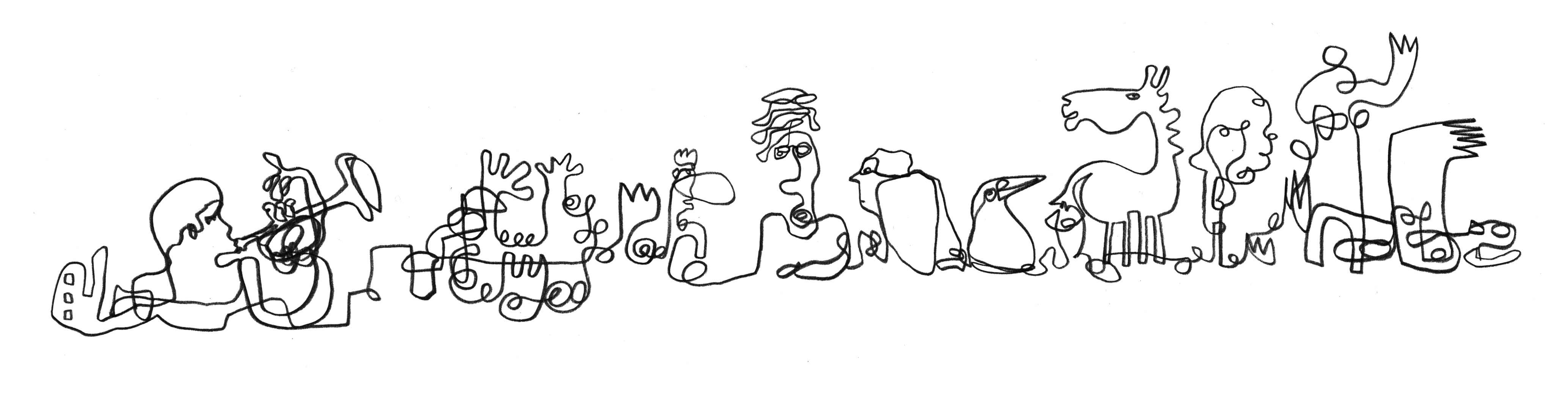
Each midnight, Trumpet Forsyth leans out of his sixth floor bedroom window and blows out his horn. The first notes are avant-garde and complicated, angry, like his guernica is inhabited by limbless limbo dancers and drowning hands. The next series of notes are big-nosed-Sonny-Rollins-sax, then tall and meditative, and after that a little fruitless like a man growing wings to turn into a penguin that will never fly. A horse bray and neigh, a dog’s head in a light bulb tree and a dancing man falling flat on his face make up the final third, and then trumpet Forsyth puts away his horn and lets the dogs, cats and manacled maniacs take up his clarion call to wake up the night.


picture by Jonny Voss

Posted in Uncategorized | Leave a comment

KICKER GIRL

Now lookee here, girl, what do you call that mess on the wall?
Dunno.
It’s a scribble, isn’t it? And a scribble don’t belong on the wall, it belongs on paper. Am I right or am I wrong?
Yep, s’pose so.
Right or wrong I asked, girl.
Right.
Right, thank you.
Granddad Pete was always shooting off about something and his granddaughter, Sophie, was normally in his firing line. She peered out from her lofty vantage point and endured it all with the cold stare of teenage oblivion.
You doing anything later, girl?
Dunno.
What about playing a sport. Tennis? Table tennis? Football?
Table football?
Don’t get fresh now, Sophie. But table football would be a start, wouldn’t it?
Yeah.
Go on then, here’s a pound. And a smile would be nice.
Sophie managed a smile, pecked her Granddad lightly on the cheek, and slouched off.
You will use the money for a game, won’t you?
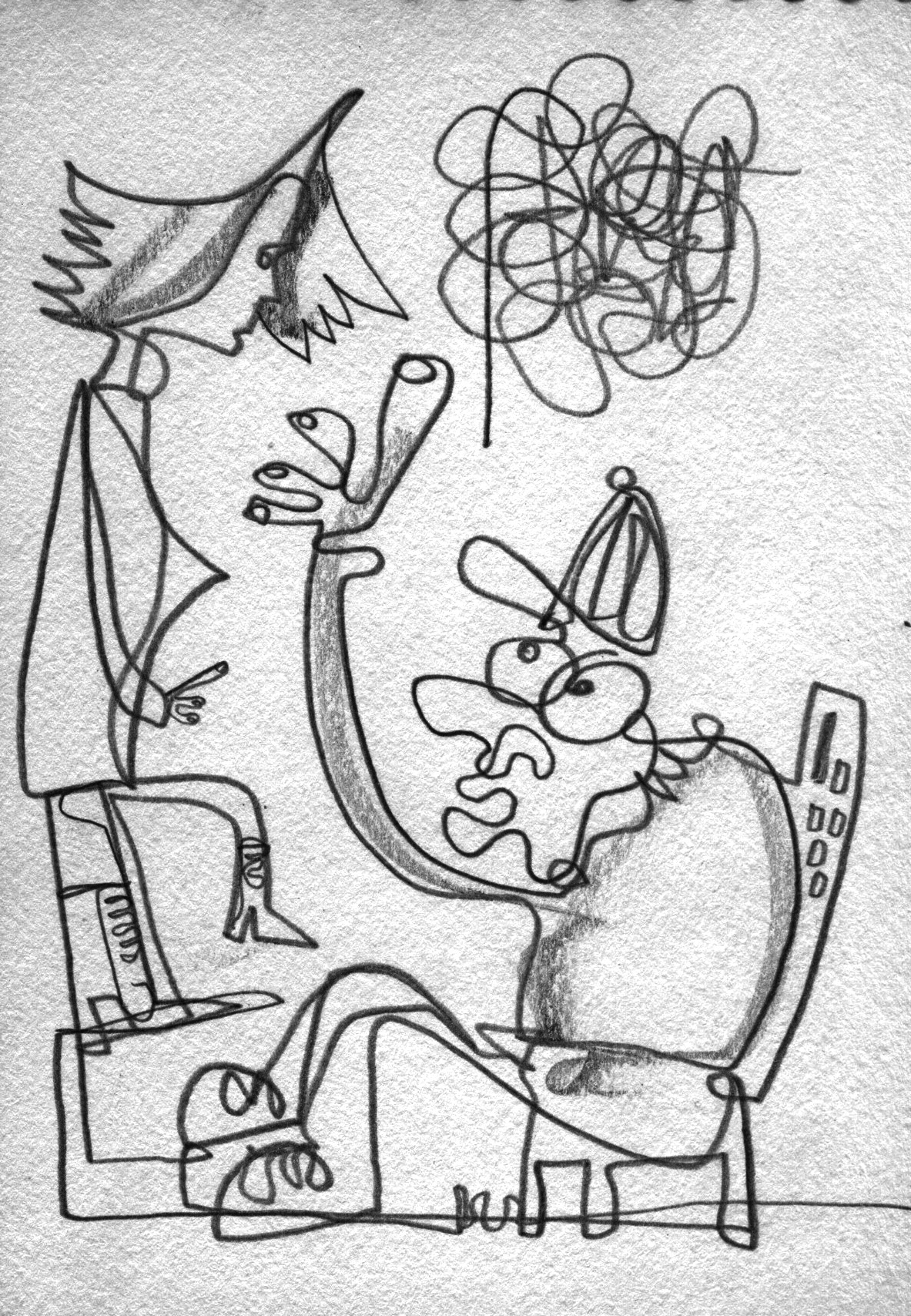
Sophie mimed the bent over flick wrist motion of the game as she walked away.
Fat chance thought granddad, but she’d be good if she did play; the girl has the right attitude.


picture by Jonny Voss

Posted in Uncategorized | Leave a comment